

When Did God Of War Come Out
God of War (2018) Alarm: Brandish championship "<i>God of War</i> (2018)" overrides earlier display championship "God of War".
God of State of war (as well known equally God of War Four ) is the sequel to God of War III also as a continuation of the canon God of War chronology. God of War is the eighth installment in the franchise overall.
Unlike previous installments, this game focuses on Norse mythology and follows an older and more seasoned Kratos and his new son Atreus in the years since God of War 3. The game released on Apr xx, 2018, and is currently exclusive to the PlayStation iv.[2] A PC port is planned for fourteen Jan 2022 and will exist on Steam and the Ballsy Games Store. [iii] A sequel, God of State of war: Ragnarök, is in development.
Story
Many years accept passed since Kratos took his vengeance against the Olympian gods. Having survived his final encounter with his father Zeus, Kratos has since travelled to Midgard in Ancient Norway and now lives with his immature son Atreus in the world of the Norse gods, a savage land inhabited by many ferocious monsters and warriors. In order to teach his son, whose mother (and Kratos's second married woman) has recently died, how to survive in such a earth, Kratos must chief the rage that has driven him for many years and encompass his newfound office as a father and a mentor.
Plot
Many years accept passed since Kratos, Spartan warrior and former Greek God of War, took his vengeance confronting the Greek Gods, and he now lives with his young son Atreus in ancient Norway in the realm of Midgard. The game begins after the death of the Jötunn warrior Faye, Kratos' second married woman and Atreus' female parent, whose final request was for her ashes to exist spread at the highest tiptop of the Ix Realms. Kratos and Atreus prepare a funeral pyre for her, mourn her death and before long keep a hunt as per Kratos' desire. Withal much to Kratos' disappointment, Atreus proves his incompetence and lack of focus, making Kratos reconsider taking Atreus in his journey. Kratos is shortly attacked by a mysterious stranger with godlike powers, and who cannot feel anything physically. After seemingly killing him, Kratos reluctantly takes Atreus with him and begins their journey.
Kratos and Atreus soon encounter many hurdles in their journey and fend them off. They also run across the Dwarven Huldra brothers, Brok and Sindri who upgrade their weaponry throughout their journey, and a mysterious but friendly Witch of the Wood, who besides provides help in her ain way afterward they save her boar, which Atreus accidentally shot. Reaching the Lake of Nine, Kratos and Atreus encounter the friendly Globe Ophidian, Jörmungandr, the final remaining giant. Afterward running into impenetrable black mist which can only be extinguished with the Low-cal of Alfheim, they receive aid from the Witch to use the Bifröst in order to travel to Alfheim and secure the Low-cal. Upon vanquishing the mist and reaching Midgard's peak, Kratos and Atreus find out the Stranger who attacked them is alive and has two henchmen, the sons of Thor, Magni and Modi at his side, interrogating an imprisoned man, revealed to be Mimir.
Afterward they leave, Kratos and Atreus confront Mimir, who reveals the Stranger equally Baldur, an Aesir and son of Odin who is the paranoid All-Father and king of Asgard. Mimir also reveals that the highest elevation of all nine realms is actually in Jötunheim, but access there has been blocked off by Odin and Thor. Mimir, however, knows of another passage. He instructs Kratos to cutting off his head and take it revived by the witch, revealed to be the Vanir goddess Freya. Kratos immediately distrusts her, merely both Freya and Mimir warn him to tell Atreus almost his true nature as a God, which Kratos keeps a cloak-and-dagger from him.
While searching for the components to open Jötunheim'southward portal, Kratos, Atreus, and Mímir's head are attacked by Modi and Magni. Afterward Kratos kills Magni, Modi flees, only later returns and ambushes them. Kratos fends him off, but Atreus collapses ill due to a mental contradiction of a god assertive himself to be mortal. Freya instructs Kratos to retrieve the heart of a detail troll in Helheim; however, his Leviathan Axe is useless there. Kratos returns home to unearth his old weapons, the Blades of Chaos, and is haunted by Athena'south spirit. After retrieving the eye, he has a haunting vision of Zeus. Atreus is cured, and Kratos tells him he is a god. Atreus and so becomes increasingly big-headed on their journeying, and he murders a weakened Modi, despite Kratos ordering him non to. At Midgard's peak, they are ambushed past Baldur. Atreus foolishly picks a fight with Baldur, who and then proceeds to destroy the portal to Jötunheim and throw the group into Helheim.
Atreus makes amends with Kratos, and while escaping from Helheim, they discover Baldur is Freya'due south son. Desperate to protect him, Freya had cast a spell on Baldur that makes him allowed to all physical and magical threats, just also makes unable to experience whatsoever joys of life, causing Baldur to resent his female parent. Returning to Midgard, Mímir realizes there is another style to attain Jötunheim, but he needs his missing centre. After obtaining it from within of Jörmungandr, who inadvertently swallowed it when he ate Thor's statue, they are attacked by Baldur again, simply Freya intervenes in an attempt to protect her son. During the fight, Baldur is pierced by Atreus' mistletoe arrow, breaking Freya's spell.
After an enormous battle, Baldur is defeated, and despite being given an opportunity to retreat, he attempts to strangle Freya, forcing Kratos to impale him. A grieving Freya swears revenge and taunts Kratos virtually hiding his true nature. Kratos finally tells Atreus about his past and how he had killed his fellow Greek gods, including his father Zeus. Atreus laments and Kratos tells him that they should learn from their experiences and non repeat the mistakes of their predecessors. Freya leaves with Baldur's corpse in silence, and Mímir hopefully suggests that she will eventually move on and acquire Kratos did the right thing.
After finally arriving in Jötunheim, they find a temple with a mural depicting their adventures, showing the giants had foreseen everything that would happen and vaguely foretold what was to come up. In improver, they find Faye was a behemothic who decided to stay behind in Midgard, making Atreus part giant, god, and mortal. Their fight with Baldur was shown, revealing he was after Faye the whole time, unaware she was deceased. Information technology is as well revealed that Atreus was named Loki by his mother. Kratos and Atreus and so fulfill their hope and spread her ashes at the peak, overlooking a valley of giants' corpses. Afterwards, Kratos reveals to Atreus that his given name was that of a compassionate Spartan comrade. Returning to Midgard, Mímir warns them that the iii-year long Fimbulwinter began, meaning Ragnarök is presently to follow—which was not supposed to occur for some other hundred years.
In the game'southward secret ending, Kratos and Atreus return home and slumber. Atreus has a vision that Thor will go far at the cease of Fimbulwinter to confront them.
Items and Abilities
Weapons
- Leviathan Axe: Kratos's primary weapon is a ane-handed boxing axe with frost magic backdrop. Leviathan tin can be immediately recalled past Kratos afterwards being thrown. The axe originally belonged to Faye, a Jötnar and the married woman of Kratos and female parent of Atreus. The brothers Sindri and Brok crafted the axe long ago and assist Kratos in upgrading it, giving information technology higher force and, with the right skills, the ability to freeze and slow downwardly enemies.
- Kratos' Fists: Kratos'southward uses his fists in unarmed combat and tin can perform multiple hit combos.
- Talon Bow: Atreus' primary weapon is a magical bow and arrows. The bow has the ability to summon spectral animals to perform attacks and assist Kratos in combat. Later on, it can gain the ability to weaken or shock enemies, among other things when used in various parts of the environs.
- Guardian Shield: Kratos has a gauntlet that transforms into a circular shield for parrying blows and broad-ranged attacks. The shield tin can be used to block attacks, projectiles, and a well-timed block can parry enemies' attacks. The shield can be upgraded to perform powerful slams and area-of-effect attacks.
- Blades of Chaos: Midway through the game, Kratos returns to his cabin and reclaims his trademark weapon from the previous games. The blades, while weaker, offer wider and faster attacks than the Leviathan Axe to make up for it. They also channel the fire chemical element, making them effective against Hel-Walkers and other enemies resistant to the axe'due south frost element. Upgrades to them will increment their runic power and give them the ability to burn enemies, sapping their health.
Relics
- Spartan Rage: After Kratos builds his rage meter, he tin can channel Spartan Rage in combat. This powerful transformation ignites flames onto the fists of Kratos. His speed is drastically increased and the power of his unarmed attacks is increased, as well as adding invulnerability (His rage meter depletes in place of his wellness when striking) and slow health regeneration. Spartan Rage has its own moveset which includes channeling shockwaves, performing ground slams, and thrown rocks and projectiles. Nevertheless this robs him of the ability to employ the Leviathan Axe or Blades of Anarchy until his rage runs out. Collecting 3 Horns of Blood Mead tin increase his maximum rage and so he tin stay in information technology longer.
- Bifröst: A relic that tin can exist used equally a primal to travel between the Nine Realms. The Realms of Muspelheim, Alfheim and Niflheim can be unlocked by getting their respective realm rune ciphers whereas Helheim, Jötunheim are unlockable through progress. The only realms locked are Asgard, Vanaheim and Svartalfheim.
- Head of Mimir: The head of Mimir is severed by Kratos during the events of the game after which the character itself becomes a constant ally and companion to Kratos and Atreus. While the caput doesn't actually have whatever gameplay elements, he tin be used for unlocking certain content and lore.
- Rock Masons Chisel Tip: Kratos tin can use this open doors locked behind magic gates.
Artifacts
- Armor Sets: Armor sets consist of a combination of wrist, chest, and waist armor. Kratos can uncover armor from chests in the world, defeating powerful enemies, and past purchasing from the shops of Brok or Sindri.
- Boat: Kratos and Atreus apply a boat to navigate beyond the Lake of Nine among other places.
Choose Difficulty
- Give Me A Story
- Give Me A Balanced Feel
- Give Me A Challenge
- Give Me God of War
Characters
- Kratos: The protagonist of the game. Subsequently the events of God of War Three, Kratos seemed to have moved to Scandinavia and has started a family. He has become older and wiser, and he has better control over his temper, his actions are no longer simply based on rage and anger, and he shows moments of regret at lashing out. However, he does this to discipline his son and tells him that not to be sorry, merely exist better.
- Atreus: The son of Kratos and Faye, Atreus is a young boy who accompanies Kratos on his journey. He is taught how to hunt early in the game and is shown to be impulsive and undisciplined. He has the ability to read runic writings and is more knowledgeable about the world and its inhabitants than Kratos. He is unaware of the god status of Kratos. He is eventually revealed to be as well named Loki, the mythological God of Mischief.
- Baldur/The Stranger: The main antagonist of the game. A man who attacks Kratos at his ain home. He is tattooed with runes which gives him the strength equal to Kratos. Later, he is revealed to exist Baldur, the son of Odin and Freya who was enchanted with invulnerability with the side-outcome of beingness incapable of feeling sensations, pain or pleasure.
- Faye: The mother of Atreus and second wife of Kratos. She dies shortly before the events of the game.
- Jörmungandr: Besides known as the World Ophidian, this mythical animal is the last of the Jötnar and is discovered past Kratos and Atreus in the Lake of Nine in Midgard. He has a fierce hatred for Thor and the 2 are destined to kill each other during Ragnarok.
- Freya/The Witch in the Forest: Encountered shortly after Kratos and Atreus commence on their adventure. She immediately senses that Kratos is a god. She assist the pair on their adventure, assisting them in traveling betwixt worlds. Later, she is revealed to be Freya, one of the Vanir gods and ex-married woman of Odin who banished her to Midgard and left her incapable of leaving or harming others and also robbed her of her Valkyrie abilities.
- Sindri and Brok (Huldra Brothers): These dwarf brothers are encountered many times through the game and are renowned blacksmiths, having forged Leviathan and Mjölnir, the hammer of Thor. The two have renounced their formal partnership earlier the events of the game. They provide upgrades for Kratos' and Atreus' weapons and armor throughout the realms.
- Magni and Modi: The sons of Thor. They help their uncle Baldur in his quest to notice someone and equally a outcome come into conflict with Kratos and Atreus.
- Mimir: The figure of expansive knowledge and wisdom who claims to be the smartest human alive. He was banished to Midgard and sealed in a tree past Odin. Kratos cuts his caput off and has it reanimated, afterwards which he starts serving equally the guide of Kratos and Atreus.
- Valkyries: Female entities who accept the warriors that were killed in boxing to Valhalla. In that location are a total of nine Valkyries, including their queen Sigrun.
- Thor: God of Thunder, son of Odin, begetter of Modi and Magni and one-half-brother of Baldur. He appears in the hugger-mugger catastrophe of the game, conjuring a thunderstorm and lightning over Kratos' firm and issuing a fight between him and Arteus.
- Odin: The unseen but overarching antagonist of the game, he is the Allfather and King of Asgard as well equally the Aesir gods. He is the father of Thor and Baldur, ex-husband of Freya and grandfather of Modi and Magni. He is noted to be responsible for the majority of the events of the game as he targets Kratos because of his fright towards him.
The Lost Pages of Norse Myth
Note: These characters are merely mentioned in The Lost Pages podcast so far.
- Gróa: A powerful seer looking for her lost hubby Aurvandil.
- Aurvandil: Gróa's husband, who went missing after setting out for Vanaheimr with Thor.
- Tyr: God of War and Law and another son of Odin.
- Thamur: A Jötunn stonemason who was killed by Thor following an argument with his son Hrimthur.
- Hrimthur: The prideful son of Thamur who unwittingly caused the death of his father by running away subsequently a fight with his begetter and is later on mentioned to accept constructed walls with a hole-and-corner weakness which he passed on to Freya earlier Thor murdered him.
- Sif: Wife of Thor.
- Bragi: The bard of the Aesir.
- Vili and Vé: Brothers of Odin.
- Hœnir: An Aesir, God of Silence.
- Heimdall: An Aesir with great foresight.
- Höðr: The blind son of Odin, God of Wintertime
- Freyr: Ruler of Vanaheim.
- Fenrir: Destined to Impale Odin
- Sköll and Hati: One day volition devour The Dominicus and Moon
- Surtr: A giant whom wields a flaming sword. Destined to destroy and ravage Asgard and fall to Odin and Thor.
Enemies
- Draugr: The virtually common enemy found in the Norse Realms. Draugrs are reanimated corpses that haunt battlefields. Many varieties of Draugr be, some with magical abilities and others with dissimilar weapons and equipment such as shields. They are found commonly throughout Midgard.
- Hel-Walker: Humanoid foes with a blue and white coloration, they populate the realm of Helheim and come up in dissimilar classes. They are by and large all resistant to the Leviathan Axe'southward attacks, requiring either fists or the Blades of Anarchy to put down.
- Troll: Norse monsters are giant creatures with a prepare of giant tusks on the edge of their faces and they behave massive pillars as weapons. Some trolls utilise dissimilar elemental and expanse-of-effect attacks.
- Dragon: These flying reptilian creatures that inhabit Midgard and are extremely powerful. One dragon Hræzlyr is encountered on the way to the Mountain.
- Wolves: Massive wild canines, they tin can appear as pawns of Revenants and are almost always in packs regardless. They attack fast and can sometimes channel poison if paired with the Revenants.
- Ogre: These species of burly, powerful, appear throughout the Norse realms. There are many variations, all of which are very powerful and usually present a significant danger in battle.
- Revenant: These mysterious creatures appear in fog and summon enemies to practise their bidding, they are difficult to defeat and must be stunned by the Talon Bow before being damaged.
- Wulver: These humanoid wolf-similar creatures stand up on their hind legs. When Wulvers howl, they volition often attack in a frenzy with incredible speed.
- Nightmare: These floating eye creatures float and shoot magic projectiles, a wide diversity of them tin be establish. While weak, they can inflict a number of status ailments depending on their element. Some tin even possess Draugr and other enemies to brand stronger and regenerate their health unless expelled out with a stiff attack.
- Dark Elves: One of two elven races that make their dwelling house in Alfheim, they are capable of flight and utilize different weapons such as spears and magical projectiles. If left unchecked, they can as well blind Kratos temporarily.
- Ancients: Aboriginal are powerful golems embued with various elemental powers including fire, frost, stone, and wood. They are stated to come from the flesh of primordial Jötunn Ymir.
- Soul Eater: Ancients that have their souls removed. Those killed by soul eater will have their soul destroyed, leaving them with no afterlife. In that location are more powerful version of Soul Eater called Soul Devourer. Like Ancients, they possess their own elemental ability.
- Reaver: Other humans or mortals left to fend for themselves in Midgard, usually resorting to plundering and looting every bit a gang.
- Traveller: Giant, armored creatures with equally giant swords and sometimes shields whose block cannot be broken. They are very stiff and tough to accept down due to their armor unless shattered with repeated strikes, but offering great rewards to assist with armor crafting.
- Tatzelwurm: Burrowers that tin launch out of the basis and launch their own projectiles.
Reception
God of War received "universal acclaim" reviews and was tagged as a "must-play" game on Metacritic holding a metascore of 94/100 based on 118 critic reviews.[4]
Development
On the twenty-four hours of December 6, 2014, Corey Barlog, the lead animator of God of War and the game director of God of War Ii revealed that Sony Santa Monica was working on a new game, in the God of War Franchise. It was announced on Twitter, only taken down later past Sony.
The game is conceptually prepare in the pre-migration point of Viking history; a menses in Norse culture where the Norse gods were said to walk among mortals.[5]
The game's soundtrack was composed by Bear McCreary.[half dozen]
Cast
Main vocalisation actors
- Christopher Gauge - Kratos
- Sunny Suljic - Atreus
- Alastair Duncan -Mimir
- Danielle Bisutti - Freya
- Jeremy Davies -Baldur
- Robert Craighead - Brok
- Adam Harrington - Sindri
- Corey Burton -Zeus
- Nolan North - Modi
- Troy Baker -Magni
- Carole Ruggier - Athena
Additional voices
- Tony Alvarez
- Jon Bailey
- Laila Berzins
- David Boat
- Anna Campbell
- Ray Chase
- Sean Chiplock
- Sara Cravens
- Molly Daisy
- Darin de Paul
- Trevor Devall
- Jake Eberle
- Tom Fahn
- Dave Fouquette
- Crispin Freeman
- Nika Futterman
- Walter Gray
- Julianne Grossman
- Charles Halford
- Anthony Hansen
- Elizabeth Knoweldon
- Lex Lang
- Misty Lee
- Ben Lepley
- Jonathan Lipow
- Martha Marion
- Dave Mattey
- Matthew Mercer
- Bill Millsap
- Lani Minella
- Dave B. Mitchell
- Andrew Morgado
- Emily O'Brien
- Jon Olson
- Chris Parson
- Donovan Patton
- Jim Pirri
- Brock Powell
- Jamieson Price
- Jonathan Rourmie
- Sean Schemmel
- Sarah Sokolovic
- Michael Sorich
- Jason Spisak
- Ryan Stephenson
- Fred Tatasciore
- Tom Taylorson
- Chris Tergliafera
- Bill Watterson
- Matt Watterson
- Scott Whyte
- Debra Wilson
Motion-Capture Performers
- Bradley Allan
- Chris Jai Alex
- Randall Archer
- Kelli Barksdale
- Christopher Donaghue
- Richard Dorton
- John Duff
- Joe Fidler
- Dan Flanagan
- Shad Gaspard
- Andrew Gates
- Joseph Gatt
- Marker Ginther
- Thekla Hutyrova
- Eric Jacobus
- Reuben Langdon
- Jade Quon
- Kyle Roy
- T.J. Tempest
- Steve Upton
Coiffure
- J.B. Blanc - Phonation Managing director, Song Coach
- Harrison Deutsch - Phonation Director
- Margaret Tang - Vocalization Managing director
Sequel
Main Commodity: God of State of war: Ragnarök
On September 16th 2020, during a showcase issue for the PlayStation v, information technology was confirmed that a follow upwardly to God of War would be coming to the system in 2021. The trailer featured a vocalism over by Kratos, once over again voiced by Christopher Judge.
Trivia
- God of War (2018) is the starting time game that doesn't focus on Greek mythology, as it has changed the narrative to Norse mythology. It is also showtime game to feature two characters (afterwards three, though Mimir only had a head and was not playable) throughout the gameplay and the first time another graphic symbol is (though partly) playable (though in God of War III Pandora accompanied Kratos during sure segments of the game, she was not playable).
- Information technology is, however, not the first time the God of War franchise features characters from a different mythology. God of War: Chains of Olympus featured aspects of Persian, Arab, and Irish mythology, in the forms of the Basilisk, Efreet, and the Banshee, and God of War II features the Kraken, which originates in the Scandinavian areas of Europe.
- God of War(2018) is the offset installment in which a major gameplay changed many traditions present in the past games of the series. The game mode had introduced: RPG elements, an over-the-shoulder style gameplay replacing the fixed camera mode from previous entries, had no sex activity mini-game, no Save Altars, no Orb Chests and supplant Nordic Chests, Orbs were replaced past Hacksilver, the Blades of Chaos-fashion HUD was adapted into a Nordic-mode HUD, had less QTE segments, and most notably, Kratos' face is not shown on the main card, even so he is shown when players first the game for the beginning fourth dimension and difficulty-level options are shown. The second is God of War: Ascension. It also marks the first fourth dimension where a player transitions immediately into the gameplay rather than a cutscene existence shown commencement.
- Early Indicatives of the fact that the game was a continuation of the series, the motility "Spartan Rage" nods to Kratos' by equally a Spartan, Kratos retains his Spartan tattoo, has scars on his forearms resembling the bondage from the Blades of Exile, the scars on his abdomen and left eye, as well as the ashes of Lysandra and Calliope roofing him.
- Due to the shift in genre, this game has far more bosses than even God of War II (14). Still, only counting unique storyline bosses as true boss fights, so this game simply has 4 (Baldur, Hraezylr, Magni & Modi, and Baldur again), the second least amount in the serial on par with Rise with only the first game lower than it.
- This is i of the 3 games where Kratos interacts with his non-godly family in real time, and non only in flashbacks. The others are God of War: Chains of Olympus and God of State of war: Ghost of Sparta.
- Christopher Judge voices Kratos in the game. He replaces Terrence C. Carson, who has voiced the character in all previous installments. Judge is well known for his role as Teal'c in Stargate SG-one. This marks the get-go game that Kratos isn't voiced by TC Carson.
- Director Cory Barlog and scenes from the last trailer repeatedly identified Kratos as a god, despite him losing his godly status mail service God of War II and technically being a demigod.
- However, he did blot Hades' Soul in God of War III, technically becoming a god once once more.
- In that location'due south also the fact that he reclaimed the Blade of Olympus at the cease of God of War Ii, which stored Kratos' godly powers.
- What's more than interesting is that Kratos said to Atreus that he's born a god, instead of demigod. He does, however, acknowledge his mortal origin every bit he tells Atreus that he's function God, part Giant, and office mortal.
- It could be safely assumed that Godhood in Kratos' views refers more towards the possession of godly inheritance and ability regardless of purity of i'due south godly genealogy. This fits perfectly with Thor, Magni and Modi every bit though they are seen every bit Aesir gods, they are in fact function Giant.
- This is the only game in the series so far to non have Linda Hunt as the narrator.
- Overall, this is the get-go PlayStation Studio endemic game, to be released exterior PlayStation consoles after the initial PlayStation console sectional release appointment.
Gallery
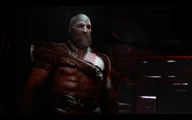
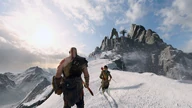
A bearded Kratos
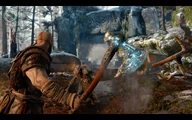
Kratos' new weapon
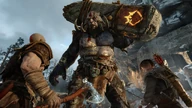
The Troll
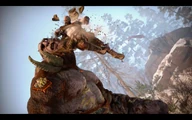
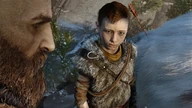
Kratos with his son.
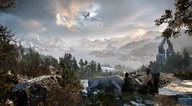
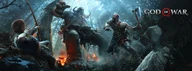
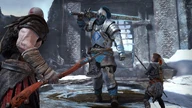
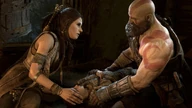
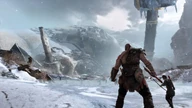
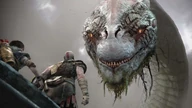
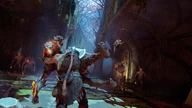
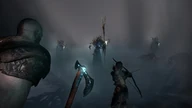
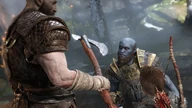
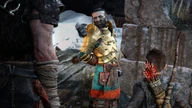
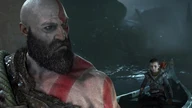

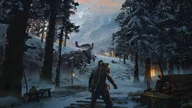
Tin can you kill something that large?
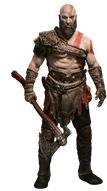
Norse Kratos
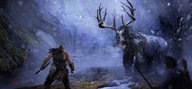
Fanart
Fanart
Fanart
Video

God of War (PS4) - E3 2016 Gameplay Trailer
God of War (PS4) - E3 2016 Gameplay Trailer
References
- ↑ https://blog.playstation.com/2021/10/20/god-of-war-2018-is-coming-to-pc/
- ↑ http://fandom.wikia.com/articles/god-state of war-shows-parental-side-kratos?utm_source=wikia&utm_campaign=recirc&utm_medium=rail&utm_content=ane
- ↑ [1]God Of War Coming to PC in January - IGN - https://world wide web.ign.com/manufactures/god-of-war-pc-steam-release-date-january
- ↑ Metascore for God Of State of warMetacritic, Retrieved May viii, 2020
- ↑ http://www.gamespot.com/articles/new-god-of-war-why-kratos-is-in-norse-mythology-no/1100-6441051/
- ↑ https://www.gamespot.com/manufactures/god-of-war-ps4s-kratos-has-changed-and-the-soundtr/1100-6458381/
| God of War Master Series | |
| Master Games: | God of War: Rising | God of War: Chains of Olympus | God of War (2005) | God of War: Ghost of Sparta | God of War: Betrayal | God of War Two | God of War Iii | God of State of war: A Telephone call from the Wilds | God of War (2018) |
| Others: | God of War (Novel) | God of War two Novel | God of War (2018) Novel | God of War (Comics) | God Of State of war (Nighttime Horse Comics) |
| Remakes and Ports | |
| Collections: | God of State of war: Collection | God of State of war: Origins Collection | God of War: Saga |
| Non-Catechism | |
| Games: | Bit of War |
| Films: | God of State of war (Motion picture) |
| Plot Elements | |
| Terms: | God of War (Title) | Gods | Immortal | Mortal | Titans | Pandora'south Box | Promise | Plagues | Colors | Greece |
| Events: | Siege of Attica | Siege of Athens | Siege of Rhodes | Titanomachy | Second Titanomachy | The Marked Warrior |
| Gameplay Elements and Bonuses | |
| Gameplay | Chest | Orb Chests | Multiplayer | Kratos' Equipment | Godly Possessions | Urns of Ability | Sexual practice Mini-Game | Quick Time Events | Rage Ability | Save Altar | Combos | Bonus Play |
| Bonuses: | Bonus Costumes | Easter Egg | Secret Message | A Secret Revealed | Birth of the Beast | The Fate of the Titan |

When Did God Of War Come Out,
Source: https://godofwar.fandom.com/wiki/God_of_War_%282018%29
Posted by: danielhatemaked.blogspot.com
0 Response to "When Did God Of War Come Out"
Post a Comment